
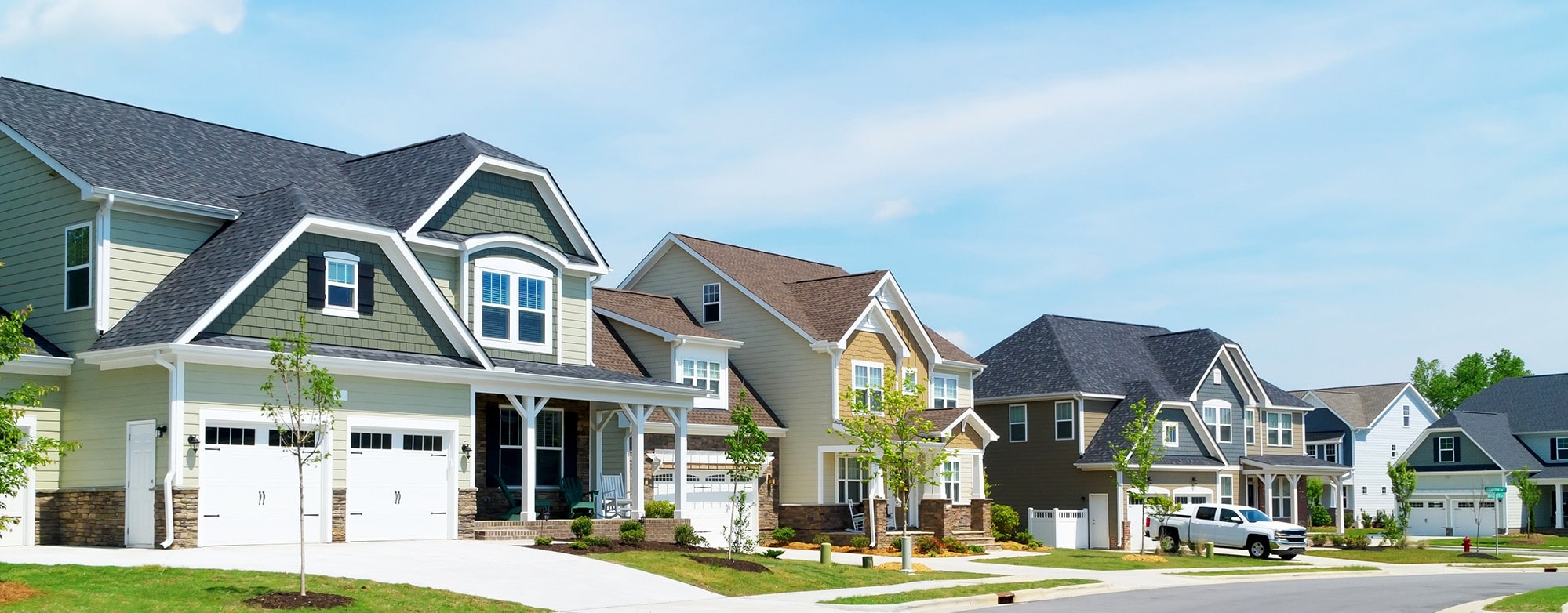
As the days grow shorter and the holiday season draws near, the economy is once again sending mixed signals. October's jobs report came in far stronger than expected, but with inflation still running well above target, the Federal Reserve held rates steady while markets increasingly expect another increase in December. Mortgage rates remain above 7%, and closer to home, Utah home sales slowed sharply in October even as asking rents held up better than a year ago. In this month's update, we'll take a closer look at the federal government's newly proposed rules limiting home purchases by large institutional investors and what they could mean for rental owners. But first, let's start with the headlines.
Headlines
October Jobs Report - The U.S. economy added 165,000 jobs in October, far exceeding expectations for a gain of about 65,000, while the unemployment rate edged down to 4.1%. Hiring was led by professional and business services (+70,000), health care (+42,000), transportation and warehousing (+25,000), and manufacturing (+19,000). Job gains for August and September were also revised up by a combined 84,000, and average hourly earnings rose 0.4% for the month and 3.1% over the past year. Taken together, the report points to a labor market that is firmer than it appeared just a month ago. With inflation still elevated, the stronger data may increase the likelihood of another Federal Reserve rate increase in December, which could keep borrowing costs higher for longer.
Weekly Jobless Claims - New unemployment claims rose by 9,000 to 200,000 for the week ending November 7, slightly above what economists had expected, while continuing claims fell by 20,000 to 1.697 million for the week ending October 31. The four-week average of new claims held steady at 195,250, suggesting layoffs remain low by historical standards and that the labor market continues to hold up heading into the holiday season. The overall picture remains consistent with a "slow-hire, slow-fire" labor market. In Utah, advance claims increased from 1,443 to 1,654, a weekly rise of 211 claims and the second straight weekly increase, which may partly reflect the usual seasonal slowdown in outdoor work as winter approaches, although claim levels across the state remain relatively low.
Consumer Price Index - Consumer prices rose 0.4% in October, a slower pace than September's 0.6% jump, while core inflation, which excludes food and energy, rose 0.3% for the third straight month. Energy price growth cooled considerably, with gasoline up just 1.0% after surging 9.1% in September, but food prices picked up 0.5%, and shelter costs rose 0.3%, accounting for over thirty percent of the monthly increase. Due to price data for October 2025 not being collected during last year's government shutdown, the Bureau of Labor Statistics was unable to publish a year-over-year inflation rate this month; the most recent annual figures, from September, showed overall inflation at 3.7% and core inflation at 2.6%. Both monthly readings came in slightly above what economists had expected, and with inflation still running well above the Federal Reserve's 2% target, this report, the last before the Fed's December meeting, may add to the case for another rate increase, although the outcome remains uncertain.
Fed Meeting - The Federal Reserve voted 10–2 to keep its benchmark interest rate at 3.75%–4.00% at its October 27–28 meeting, following September's quarter-point increase. The two dissenting members, Governor Lisa Cook and Cleveland Fed President Beth Hammack, favored raising rates by another quarter point. In its statement, the Fed described economic activity as expanding at a strong pace and said additional information will help determine the appropriate policy stance, while Chair Kevin Warsh emphasized that the committee remains focused on returning inflation to 2%. Following October's strong jobs report, markets now see a December rate increase as increasingly likely, although nothing is certain. For now, the Fed will continue monitoring incoming data ahead of its next meeting on December 8–9.
New Federal Rules Spell Out the Ban on Large Investor Home Purchases
If you follow this newsletter, you may remember that in August we covered the 21st Century ROAD to Housing Act, the sweeping federal housing law that, among other things, restricts institutional investors that own 350 or more single-family homes from buying additional existing homes. Last month, the federal government took the first step toward putting that restriction into practice. On October 23, the U.S. Department of the Treasury published proposed rules implementing the law's ban on large institutional investor purchases of single-family homes, which takes effect on January 7, 2027.
What the Proposed Rules Do
- Who is covered: The ban applies to for-profit companies in the business of owning single-family homes that control at least 350 homes, either on their own or together with related entities. Individual owners and small portfolios below that threshold are not the target of the rule.
- What is prohibited: Beginning January 7, 2027, covered investors generally may not buy, or contract to buy, a single-family home unless the purchase fits one of the law's exceptions.
- Build-to-rent exception: Investors may still buy newly built homes that have never been owner-occupied, as long as the purchase occurs within 18 months of the certificate of occupancy and the first occupants are renters.
- Renovate-to-rent exception: Investors may buy homes that fail key structural or building-system code requirements, provided they fix all material deficiencies and spend at least 15% of the home's purchase price (excluding land value) on improvements. Cosmetic updates do not count.
- Penalties: Violations can carry civil penalties of up to the greater of $1 million or three times the purchase price of the property.
Other exceptions cover purchases from another large investor that already owned the home when the law was enacted, programs that help renters build credit and work toward homeownership, and certain foreclosure and loan-servicing situations. Treasury describes this proposal as the first phase of its rulemaking, with future rules expected to address compliance, reporting, and enforcement.
What This Means for Rental Owners
For most owners, the rule does not change anything directly — the restrictions apply only to very large portfolios. The more likely effects are indirect. Fewer large investors bidding on existing single-family homes could modestly change the buyer pool for owners who eventually sell, particularly for move-in-ready homes in the price ranges institutional buyers have historically targeted. At the same time, the build-to-rent exception may steer more institutional capital toward newly built rental communities, which could gradually add professionally managed competition in some submarkets. In either case, any local impact is likely to unfold gradually rather than all at once.
Looking Ahead
The public comment period on the proposal runs through November 23, 2026, and the final rules could change based on the feedback the Treasury receives. Several questions, including exactly how homes are counted across related entities, remain open. We will continue monitoring the rulemaking and keep you posted as the final rules take shape ahead of the January 7 start date.
Utah Real Estate Market
Utah's housing market slowed noticeably in October as higher mortgage rates continued to weigh on buyers. The median sold price eased to $607,500, down 1.22% from September but up 0.42% from a year ago. 1,156 properties sold, down 17.55% month over month and 28.38% below last October's pace, although sold counts for the most recent month typically revise upward as late closings are recorded. Active listings edged up to 6,480, a 0.64% monthly increase and 6.46% higher than a year ago, giving buyers more selection than they had last fall. Homes also took longer to sell, with the median time on market rising to 45 days. Overall, October showed a market with stable prices but a slowing pace of sales as we move into the quieter winter months.
Utah Real Estate Market (3-county single-family)
| Metric | Oct 2026 | Monthly change | Year over year |
|---|---|---|---|
| Median Sold Price | $607,500 | −1.22% | +0.42% |
| Sold Count | 1,156 | −17.55% | −28.38% |
| Listings On Market* | 6,480 | +0.64% | +6.46% |
| Median Days on Market | 45 | +15.38% | +12.50% |
*Listings on market at any point during the month (WFRMLS reconstruction). Runs ~5% below the URE dashboard's "Average # of Listings"; internally consistent month-over-month.
Monthly Series
| Month | Median Sold Price* | Sold Count* | Listings On Market* |
|---|---|---|---|
| October 2025 | 604,950 | 1,614 | 6,087 |
| November 2025 | 602,000 | 1,227 | 5,537 |
| December 2025 | 612,000 | 1,481 | 5,132 |
| January 2026 | 597,605 | 1,011 | 5,019 |
| February 2026 | 591,000 | 1,303 | 5,523 |
| March 2026 | 599,000 | 1,649 | 6,033 |
| April 2026 | 615,000 | 1,658 | 6,402 |
| May 2026 | 619,500 | 1,747 | 6,679 |
| June 2026 | 629,900 | 1,795 | 6,716 |
| July 2026 | 620,000 | 1,719 | 6,685 |
| August 2026 | 611,800 | 1,360 | 6,543 |
| September 2026 | 615,000 | 1,402 | 6,439 |
| October 2026 | 607,500 | 1,156 | 6,480 |
| Monthly Change: | Down 1.22% | Down 17.55% | Up 0.64% |
| Year Over Year: | Up 0.42% | Down 28.38% | Up 6.46% |
* all graphs/data are for single-family homes in Salt Lake, Utah, and Davis Counties.
Rent Report
Utah's rental market held steady in October, with the median asking rent across the Wasatch Front markets we track rising 0.36% month over month to $1,400 — up 4.09% from a year ago. Performance continued to vary by city. Provo remained the strongest year-over-year performer, with asking rents up 13.04% from last October despite a 1.89% monthly dip to $1,300. Sandy (+4.65% to $2,250) and Orem (+5.68% to $1,395) led monthly gains, although Orem remains about 5% below last year's level. Salt Lake City eased 3.63% for the month to $1,300 but is essentially flat year over year, while Layton held steady at $1,795. Rental homes continued to lease at a healthy pace, with typical marketing times of 9 to 24 days across the major cities. Overall, Utah's rental market remains relatively stable heading into the slower winter season, although performance continues to vary by location.
Rent Report (RentCast, median asking rents)
| Area | Median Rent | MoM | YoY | Rent/sqft | Days on Market | Active Rentals |
|---|---|---|---|---|---|---|
| Utah (statewide, Wasatch Front + Park City metro ZIPs) | $1,400 | +0.36% | +4.09% | $1.49 | 19 | 3,342 |
| Salt Lake City | $1,300 | −3.63% | +0.39% | $1.71 | 20 | 1,503 |
| Sandy | $2,250 | +4.65% | +0.04% | $1.26 | 17 | 233 |
| Millcreek (thin market — 2 ZIPs; use with caution) | $1,450 | −25.64% | −13.43% | $1.48 | 21 | 131 |
| Provo | $1,300 | −1.89% | +13.04% | $1.25 | 24 | 358 |
| Orem | $1,395 | +5.68% | −5.42% | $1.32 | 19 | 243 |
| Layton | $1,795 | +0.00% | +0.00% | $1.34 | 9 | 179 |
Median rent by bedrooms
| Area | Studio | 1BR | 2BR | 3BR | 4BR | 5BR |
|---|---|---|---|---|---|---|
| Salt Lake City | $950 | $1,174 | $1,600 | $2,300 | $2,895 | $2,695 |
| Sandy | $995 | $1,250 | $1,600 | $2,375 | $2,500 | $2,650 |
| Millcreek | $1,195 | $1,050 | $1,395 | $2,245 | $2,700 | $3,200 |
| Provo | $795 | $630 | $1,275 | $1,750 | $2,195 | $2,495 |
| Orem | $775 | $849 | $1,350 | $1,600 | $2,500 | $2,600 |
| Layton | $850 | $1,325 | $1,350 | $1,900 | $2,320 | $2,800 |
*Sales data: WFRMLS closed transactions, aggregated by Wolfnest. Rental data provided by RentCast (median asking rents).
Industry Updates
HUD Opens FHA Financing to Build-to-Rent Communities - On October 14, HUD announced that the Federal Housing Administration will now insure financing for build-to-rent communities through two of its multifamily loan programs, one for new construction and one for the acquisition or refinancing of recently built rental properties. To qualify, projects must include at least five detached single-family homes, duplexes, or triplexes on a single contiguous site, be operated as one rental property under professional management, and meet more conservative underwriting standards than traditional apartment loans. HUD says the change is intended to spur development and expand rental options. For individual rental owners, the move may gradually increase the supply of professionally managed single-family rentals in growing suburban markets, making competitive pricing, responsive maintenance, and property condition even more important over time.
Rent Control Gains Ground in California Ballot Results - Rent control measures saw moderate gains in Bay Area cities in early November 3 election returns. In Berkeley, Measure X was passing with roughly two-thirds of the vote, tightening the city's existing ordinance with a 10% annual cap on rent increases and expanded tenant-association rights in buildings with five to ten units. San Pablo's Measure S, which would cap increases at 3% or 60% of local inflation and raise relocation payments for no-fault evictions, was also leading, while Redwood City's Measure E was trailing with about 56% opposed. Results remain unofficial. Earlier this year, Massachusetts' highest court kept a proposed statewide rent control initiative off the November ballot. Utah law continues to prohibit local governments from enacting rent control, but these measures show the issue remains active nationally, and owners should continue watching for related proposals.
Summarize this content with AI:
Chat GPTGrok
Perplexity
Claude.ai